New asbestos regulations in Catalonia: what changes when selling or renting a property
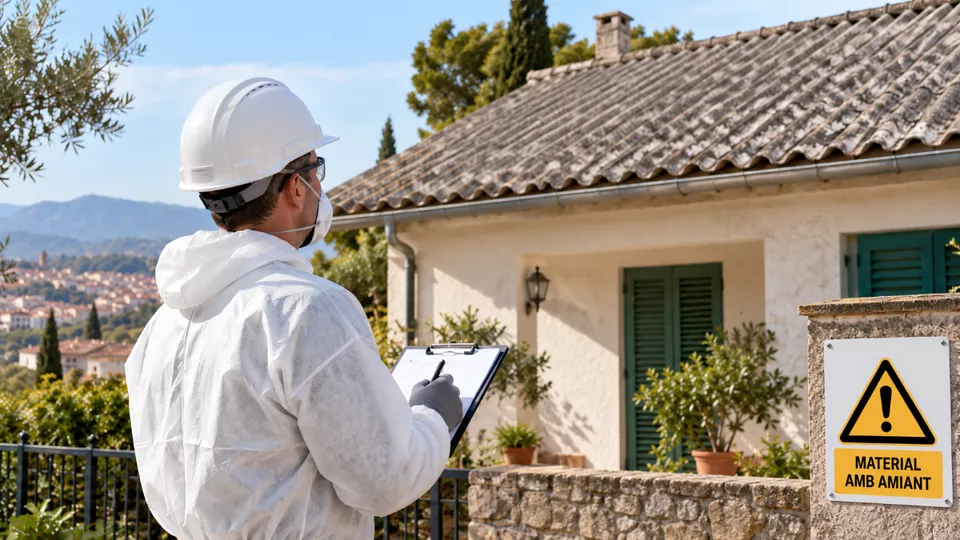
As of 3 October 2026, Law 8/2026, of 2 July, on asbestos eradication comes into force in Catalonia, a pioneering regulation that introduces major changes for owners, buyers and tenants of all types of properties.
One of the changes that most directly affects the property sector is the obligation to provide a certificate of asbestos presence or absence in sale and rental transactions.
What is the certificate of asbestos presence or absence?
The new law establishes that, when formalising the sale or rental of a property in Catalonia, it will be mandatory to deliver the buyer or tenant an official certificate stating whether or not this material is present in the building.
Pending the Generalitat approving the regulations that will govern the final format and procedure for this document, the law states that the certificate must at least confirm:
-
The presence or absence of visible asbestos in the property (fibrocement roofs, downpipes, tanks, insulation, etc.).
-
The state of conservation of any asbestos-containing materials, if detected.
-
The level of risk that these elements may pose to people's health.
Purpose of the measure: To ensure maximum transparency in property transactions and protect public health, making sure buyers and tenants have accurate information before signing any contract.
Does this obligation only affect older homes?
This is one of the most common questions among owners. Although the use of asbestos was definitively banned in Spain in 2002 and its presence is most common in buildings from before that date, the law does not currently establish any automatic exemption based on the year of construction.
Article 21 of Law 8/2026 requires the certificate to be delivered when selling or renting a property, without distinguishing between older buildings and newly built ones. Therefore, under the current wording of the rule:
-
A home built in 1970 must have the certificate.
-
A property from 1995 is also included.
-
A new-build flat or a property built in 2020 is likewise subject to the rule when put up for sale or rent.
Naturally, in newer properties the likelihood of finding asbestos is practically zero, but the law requires formal proof unless the subsequent regulatory development states otherwise.
What happens if the certificate detects asbestos in the home?
It is important to note that the presence of asbestos does not prevent the sale or rental of the property. The purpose of the certificate is to inform and assess the condition of the material.
If asbestos is detected, the regulations will establish the applicable guidelines for control, maintenance or gradual removal in each case. It is essential to remember that asbestos materials should never be cut, handled, drilled or removed privately, as these tasks must be carried out exclusively by specialised companies registered with the RERA (Register of Companies with Asbestos Risk).
Who can issue this certificate?
This is one of the points that will be specified shortly. Law 8/2026 itself states that the technical conditions for issuing it, and the professionals or entities authorised to do so, will be determined by regulation.
Until the Govern publishes that regulation, the law sets out the minimum content mentioned above that the certificates issued during this transitional period must meet.
New mandatory documentation in the property file
The entry into force of this regulation adds a new essential document to the list of checks required for any property transaction in Catalonia.
Along with the usual documentation —such as the energy performance certificate, the habitation certificate, the land registry extract or the IBI receipt—, owners and estate agencies must also include the asbestos certificate. The law further strengthens the role of sector professionals in ensuring compliance with the client's right to this information.
When does the law come into force?
Law 8/2026 was published in the Diari Oficial de la Generalitat de Catalunya (DOGC) on 3 July 2026 and comes into force on 3 October 2026.
Certain operational aspects —such as the official format of the certificate or the specific penalty regime— will be rolled out as their corresponding regulatory developments are approved.
At Finques Gineró we work for your peace of mind in property matters
At Finques Gineró, we continuously monitor legislative updates affecting the property market in order to provide reliable advice to owners, buyers and tenants.
As this is a recent regulation whose regulatory development will be completed over the coming months, we will keep this information updated as the public administration issues new criteria, instructions or official forms.
Information updated as of September 2026. This article is for informational purposes only and does not replace the specific technical, architectural or legal advice that each property may require.